
Why Progressives Keep Losing the Message War — and How to Fix It
From Lab Coats to Campaigns: What Alan Alda Can Teach Us About Winning Voters

I’m back.
After spending the past few weeks focusing on preparation for the 2026 cycle, I’m restarting my Substack posts. The urgency hasn’t gone away - in fact, it’s grown. We have to do more than resist. We have to connect. We have to communicate. We have to win.
Right now, people are hurting. Economic anxiety is high, and high-minded entreaties to “protect democracy” often fall flat when folks are struggling to pay rent, afford groceries, or keep their kids safe. Trump’s popularity is shrinking, but the Democrats in Congress have historically low approval as well. Meanwhile, the right wing operates a 24/7, organic firehose of disinformation - relentless, emotional, and perfectly tuned to stir grievance and belonging. Progressives? We still rely too heavily on late-stage messaging, insider jargon, and culturally disconnected appeals.
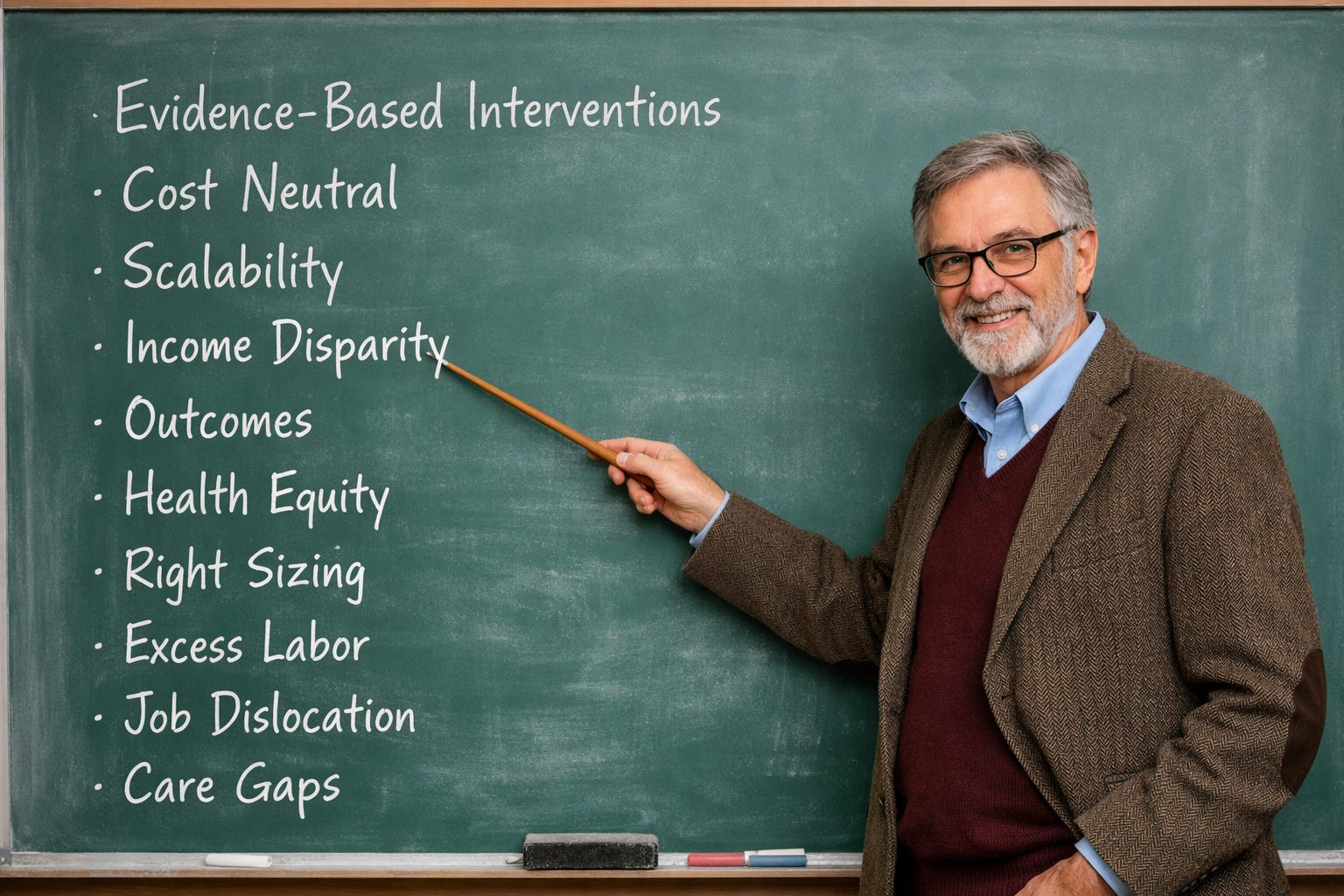
(Above - my start of a list of terms and words we should NEVER use…)
In 2017, I attended a lecture by Alan Alda - yes, that Alan Alda - where he discussed his work helping scientists become better communicators. His book, If I Understood You, Would I Have This Look on My Face?, is part memoir, part communication manifesto. Alda spent years hosting Scientific American Frontiers and witnessing brilliant minds struggle to make their work accessible. That experience pushed him to create training for scientists, rooted in empathy, improvisation, and storytelling. (There’s a great program based on his work at Stony Brook University.)
As I revisited his book recently, I couldn’t help but draw parallels to progressive political communication. Alda’s insights apply to us - urgently. Because too often, we’re still acting like high school debaters: convinced a perfectly crafted 75-word message will win hearts and minds. But culture crushes credentials. Connection matters more than a message alone.
So what can we borrow from Alda’s work to better reach persuadable voters? Below is a breakdown of how his key techniques can shift our approach - from messaging at people to connecting with them.
🌟 Technique-by-Technique Breakdown
1. 🧠 Relating Before Communicating
“They don’t care what you know until they know you care.”
Progressive Misstep: Jumping into stats, ideology, or moral arguments before building trust.
Alda-Inspired Shift:
Lead with shared values: safety, fairness, dignity.
Ground policies in personal relevance: how will this affect your family, job, or neighborhood?
Instead of: “We need to decarbonize to meet climate targets.”
Try: “We all want our kids to breathe clean air and have good jobs in 10 years.”
2. 🫂 Empathy & Theory of Mind
“Try to know what it’s like to be them - not what you wish they were.”
Progressive Misstep: Assuming everyone shares your worldview or values.
Alda-Inspired Shift:
Understand lived experience - economic anxiety, cultural change, safety concerns.
Ask: What fears or hopes is this person bringing to the conversation?
3. 🎭 Improv Techniques - Be Present and Responsive
“Communication is a dance, not a lecture.”
Progressive Misstep: Rehearsed talking points that ignore emotional nuance.
Alda-Inspired Shift:
Train organizers in active listening.
Build responsiveness into canvassing and organizing.
4. 📖 Storytelling Over Statistics
“You can’t reason someone out of something they weren’t reasoned into.”
Progressive Misstep: Leaning on data and moral logic.
Alda-Inspired Shift:
Use stories to humanize policy.
Let people see themselves in the outcome.
Talk about Mike who works 60 hours and still can’t afford insulin - not just “pharma monopolies.”
5. 🧠 Avoiding Jargon, Adapting Language
“Say it so your grandmother would understand - and care.”
Progressive Misstep: Using terms like “intersectionality” or “late-stage capitalism” without translation.
Alda-Inspired Shift:
Use plain language and relatable metaphors.
Translate values into everyday concerns.
6. 🤝 Mutual Engagement - Make It a Conversation
“Let people co-create the meaning with you.”
Progressive Misstep: Talking at voters, especially online.
Alda-Inspired Shift:
Ask questions. Invite feedback.
Treat voters as co-authors of the political future.
🧰 In Practice: What Could This Look Like?
Start canvassing conversations with: “What’s most important to you right now?”
Listen first. Mirror concerns.
Share personal stories that echo theirs.
Avoid preaching. Invite reflection.
Build connection before persuasion.
This is just the beginning. I’ll be writing more about how we can shift progressive communication for this new era. Not just to fight back, but to win people over -through trust, empathy, and real connection. I am also working on new trainings and voter communications projects - let me know if you are interested in helping or partnering.
Helpful stuff:
of course can't beat your earlier piece i got out widely to Dems
Outgunned, Outposted, and Out of Touch:
What Democrats Must Do Differently on Political Communication
Will Robinson
Jun 22, 2025
Democrats didn’t just lose control of the message in recent years - we lost the medium, the momentum, and the muscle memory for how to fight a long campaign in a shifting media war. In 2024, the Right didn’t win with better policies, stronger candidates, or more money. They won with something far more powerful: a decentralized, relentless, 24/7 communication machine that knows how to make people feel something, every single day.
We can’t afford to keep responding to this with press releases, sporadic ad buys, and message-tested “talking points” dropped into the void. If we want to win again - not just elections but the future - we have to build different, speak different, and listen different.
"Culture crushes credentials. Every. Single. Time."
It’s not just our candidates who failed. It’s our campaigns - and how we communicate.
The Right’s Asymmetric Advantage
The conservative movement has built a sprawling, always-on communications ecosystem. It’s not just Fox News and talk radio anymore - it’s a web of Facebook groups, hyperlocal influencers, YouTube rage-podcasters, TikTok conspiracy loops, Telegram channels, Spanish-language disinformation, and AI-generated propaganda running 24/7. They’ve overtaken not only the mainstream media - but the mental bandwidth of millions.
Their strength isn’t just repetition. It’s immersion.
They've mastered a feedback loop that goes top-down and bottom-up: disinformation is seeded by influencers or bots, echoed by talk radio or fringe outlets, and then laundered through trusted local voices—pastors, sheriffs, coaches, county chairs, Spanish-language radio, even fake hometown newspapers. The result? What starts as a lie on a fringe site becomes gospel truth in your uncle’s WhatsApp group.
“Flood the zone with shit.” - Steve Bannon
By contrast, Democrats still treat communication like a campaign accessory. We rely on mainstream press hits and paid ads. We speak at voters, not with them. And we too often equate communication with branding—when it should be organizing.
As Tony Schwartz taught us:
“Resonance, not reason, is what gets through.”
If you want to change what people think, start with how they feel.
The Collapse of the Middle and the Rise of the Void
The media landscape has fractured beyond recognition. Since 2005, over a quarter of American newspapers have shut down. Thousands of communities now live in news deserts, with no local watchdogs or trusted reporters. Meanwhile, local TV news has shifted toward sensationalism, and network news is bleeding viewers thanks to cord-cutting.
This collapse has eliminated the referees of public life. In the vacuum, disinformation metastasizes. Facebook groups, YouTube channels, right-wing talk radio, and algorithm-fed influencers rush in to fill the void.
This has created asymmetrical information environments:
• Democratic voters still engage with a broad, fact-based media diet: NPR, CNN, The New York Times, and local news (where it exists).
• Republican voters, by contrast, often rely on a narrow band of partisan, misleading sources. Over 60% cite Fox News as their top source. Far more consume news from conservative influencers than any traditional outlet.
•
Worse, trust has collapsed. In 2023, only 11% of Republicans said they trusted the media - compared to 58% of Democrats. The result is that one side is debating policy, while the other is living in a parallel reality.
Democratic campaigns often try to push facts into this void - but facts don’t land in voids. They get lost.
Maya Angelou Had It Right
“People will forget what you said, people will forget what you did, but people will never forget how you made them feel.”
This isn’t just wisdom. It’s strategy.
We bombard voters with charts, stats, rebuttals, and policy explainers. But voters aren’t spreadsheets. They’re people. If our content doesn’t make them feel seen, understood, or valued, then we’re not persuading. We’re performing.
In an emotionally saturated world, attention is emotional first, informational second. We must design our communications to stir emotion - not just deliver facts.
“What do people need to feel in order to believe us, trust us, and act with us?”
Clayton Christensen Warned Us
Clayton Christensen’s Innovator’s Dilemma explains why powerful institutions often fail to adapt:
“The reason why it is so difficult for existing firms to capitalize on disruptive innovations is that their processes and their business model... render them incapable of doing the things that are required to succeed in the new market.”
That’s the Democratic Party today. Our communications infrastructure was built for a broadcast world - and we’re now living in an interactive, decentralized, rapid-response media battlefield.
The GOP responded to this disruption with invention: they built a new ecosystem from scratch - talk radio, cable, online propaganda, digital influencers. Democrats, meanwhile, kept hoping the old media would hold.
Now we’re losing the war, not because we lack talent or values, but because we’re using outdated weapons.
Paul Tully Understood the Stakes
Paul Tully, the visionary DNC political director I worked alongside for over a decade, used to say:
“You can’t beat something with nothing. And you can’t win hearts with a memo.”
He believed politics was not a contest of bullet points - it was a fight for narrative and belonging. Tully knew that stories persuade better than statistics. That communities are moved by voices they trust. And that organizing and messaging are not separate - they’re two sides of the same coin.
It’s time to remember his wisdom.
So What Do We Do?
We keep trying to win 21st-century elections with 20th-century tools: TV ads, poll-tested talking points, and campaigns that vanish after Election Day. But the truth is, this isn’t about spending more money on ads.
It’s about rebuilding how we communicate - by combining organizing and communications into one continuous, bottom-up, emotionally resonant infrastructure.
From Ads to Ecosystems
The right has built a permanent media machine that’s always on. Democrats need the same.
That means:
• Investing in platform-native content - TikToks, YouTube shows, Discord chats, Instagram reels.
• Building community media capacity: local newsletters, Spanish-language podcasts, union TikTok creators.
• Supporting influencers and creators, not just consultants.
• Funding year-round teams that keep messaging alive during off years.
“If we want to shape public opinion, we need to be part of the public conversation - every day.”
From Information to Connection
Policy doesn’t move people. Stories do.
Instead of fixating on what we want to say, we must focus on how people need to feel.
That means:
• Leading with real voices - workers, parents, veterans, teachers.
• Using formats people trust: short video, testimonials, memes, lives.
• Prioritizing emotional clarity over policy complexity.
“People will never forget how you made them feel.” -Maya Angelou
“Resonance, not reason, is what gets through.” -Tony Schwartz
GREAT story with simple, solid suggestions that make huge differences when the fight is to derail a clearly deranged president with a demonic streak who is hellbent on hacking the U.S. to death just because he can, which is a bitter pill for Americans on its own merit. Here's to you, Mr. Robinson.