
Losing Elections Has Consequences.
But Some Democrats Still Believe 2026 Will Take Care of Itself.

One of the most dangerous habits in American politics is assuming the other side will collapse under the weight of its own extremism.
Democrats have done this before.
They did it in 2010 and lost state legislatures that shaped congressional maps for a decade.
They did it in 2014 and watched Republicans consolidate control across the states.
They did it in 2016 and 2024 and woke up to Donald Trump in the White House, a conservative Supreme Court, Roe eventually overturned, and a right-wing judicial infrastructure that will shape the country for a generation.
And now I’m starting to hear the same complacency again.
“Trump’s numbers are down.”
“Gas prices are up.”
“Republicans are overreaching.”
“Democrats are going to win in 2026.”
Maybe.
But losing elections has consequences long before Election Day itself. It determines who controls redistricting. Who controls voting laws. Who controls state election certification systems. Who controls the courts. Who controls labor policy, education policy, reproductive rights, environmental regulation, and eventually the presidential map itself.
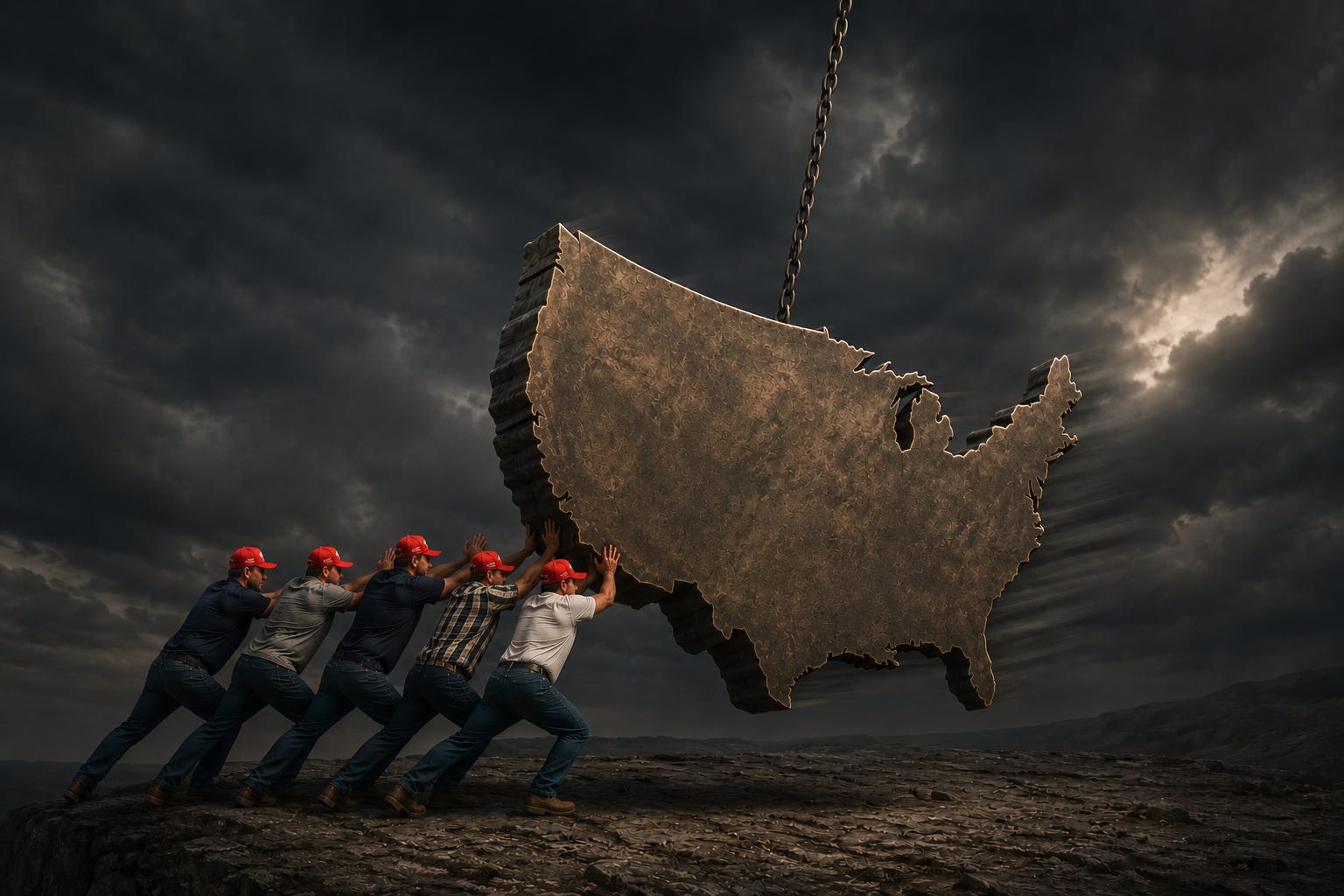
Too many people are acting like 2026 is inevitable. It isn’t. The pendulum swing towards the Democrats is not automatic.
The right is already pushing early, organizing early, spending early, and shaping the information environment every single day while too many Democrats are waiting for “the mood” to save them.
The reality is that the 2026 landscape is much harder than many activists, donors, consultants, and institutional Democrats want to admit.
The House map is narrow. There simply are not that many truly marginal seats left. Democrats need only a small number of pickups numerically, but the battlefield itself is limited and heavily engineered through years of Republican redistricting and geographic sorting. Republicans built much of this advantage after the 2010 wave election and never stopped refining it. And the recent US Supreme Court Voting Rights decision and the Virginia Supreme Court decision makes winning back the House majority harder. (Charlie Cook’s analysis linked below.)
The Senate landscape is even more dangerous.
Democrats need a net gain of four seats to retake the Senate. That means nearly everything has to break correctly at once. Maine, North Carolina, Ohio, Georgia, and several other races are already becoming brutally expensive battlegrounds. Republicans only need to hold enough ground to run out the clock.
And then there are the governors races.
Some people are dramatically underestimating the danger of Democrats losing Michigan and Wisconsin.
Those are not just gubernatorial races. They are THE blue-wall infrastructure races.
Those governors influence election administration, voting rules, veto power over state legislation, labor policy, education policy, and the political environment heading into 2028. Losing one would hurt. Losing both would fundamentally weaken Democratic infrastructure across the industrial Midwest.
And there still is the problem of the Democrats lack of an effective message…
Meanwhile Republicans are not waiting around.
The latest AdImpact tracking and Cook Political analysis show Republicans dramatically accelerating spending across competitive races. Total spending across competitive House, Senate, and gubernatorial races has already surpassed $323 million - and Republicans now hold more than a 2-to-1 spending advantage overall in those races. Republican spending jumped nearly 50% in a single month this spring. Democrats are growing steadily, but Republicans are scaling aggressively.
The gubernatorial imbalance is especially alarming.
Republicans are outspending Democrats roughly 40-to-1 in competitive governor races right now. Michigan alone has already seen major Republican investment while Democrats remain comparatively quiet. Wisconsin is also beginning to see increasing Republican positioning. (Page Gardner’s Substack on Ad Spending is linked below.)
And this is before the full outside-group ecosystem fully engages.
At the same time, Republicans and Right Wing continue to build a layered organic communication infrastructure that does not turn off after Election Day. Conservative media ecosystems communicate every single day through podcasts, YouTube, Facebook pages, influencers, churches, local grievance networks, issue groups, sports culture, gun culture, parent groups, and algorithmically optimized outrage.
The right understands something Democrats still struggle to operationalize:
Politics is now an always-on attention war.
You do not wait until September to introduce yourself to voters anymore.
You do not wait until October to define your opponent anymore.
You do not rely primarily on thirty-second television ads dropped into a fragmented media environment where fewer and fewer persuadable voters are even watching.
But that is still how much of Democratic spending operates.
Too much money still floods into late television reservations after voters have already spent months - or years - inside right-wing narrative ecosystems.
Too many Democratic donors still think spending early is “risky,” while somehow believing panic-spending massive amounts in September is strategic.
It is backwards.
The right is shaping perception while Democrats are still waiting for the campaign calendar to officially begin.
And all of this is happening while Republicans continue pushing aggressive voting restrictions, citizenship verification systems, voter-roll purges, mail-ballot limitations, and legal strategies designed to narrow participation. Recent Supreme Court decisions weakening parts of the Voting Rights Act only increase those risks. The fight over democracy infrastructure is not theoretical anymore. It is operational. It is happening right now.
The Democratic response cannot simply be:
“Trump is unpopular.”
Because Democrats are unpopular too.
That is the part many people do not want to say out loud.
If voters are angry at Trump but do not see a compelling alternative, many will not automatically become Democratic voters. They may simply disengage. They may tune out. They may stay home.
And low-turnout midterms in structurally difficult maps are exactly how parties lose power they assumed was safe.
The problem is not simply messaging.
It is infrastructure.
It is speed.
It is attention.
It is whether Democrats are willing to build permanent communication systems instead of temporary campaign bursts.
It is whether donors and institutions understand that the campaign is already happening - online, locally, culturally, algorithmically - whether they are spending or not.
Right now, too many Democrats are behaving like spectators waiting for conditions to save them.
Conditions do not save political movements.
Organization does.
Communication does.
Infrastructure does.
Repeated contact does.
Early spending does.
Narrative dominance does.
And if Democrats wait until September and October again while Republicans spend all year defining the stakes, defining the culture, defining the economy, defining patriotism, defining masculinity, defining freedom, and defining Democrats themselves - they should not be shocked if the results are much closer than people currently assume.
People need to wake up.
The election is not “this Fall.”
The election has already started.
And every month Democrats delay building communication infrastructure, digital reach, local media ecosystems, persuasion networks, and sustained voter contact is another month Republicans are shaping the battlefield uncontested.
If Democrats want to win in 2026, they need to start acting like they could lose.
Resources:
Charlie Cook's Analysis of House Races
Page Gardner's Substack On Democratic and Republican Ad Spending
Democrats are what we have for now, but it is going to take a new kind of politics and political animal to stitch our country back together. May they will rise from the Democrat ranks, but I am skeptical.
Will is right about the danger of Democratic complacency and the reality that Republicans are operating inside a permanent communication ecosystem.
But I think there’s another piece of this conversation we are still avoiding.
How exactly do we build this “always-on” communication infrastructure?
Because campaigns come and go. Consultants come and go.
What Republicans have built over decades is not just a political operation. It is a social and cultural messaging network made up of trusted messengers communicating every single day through churches, podcasts, Facebook groups, local influencers, community organizations, sports culture, parent groups, veterans groups, and everyday relationships.
We, on the other hand, still rely too heavily on institutional communication and reactive messaging. Republicans say something outrageous and Democrats respond: “That’s bad.” But defense is not a messaging strategy.
If Democrats want to compete in an always-on attention environment, then we need to seriously think about how to build a network of grassroots messengers who are trusted inside their own communities year-round, not just during campaign season. Not polished surrogates. Not talking points factories. Actual people who can communicate values, consequences, and lived experience in ways that feel human and real.